Keeping Manitoba’s Doctors in Manitoba

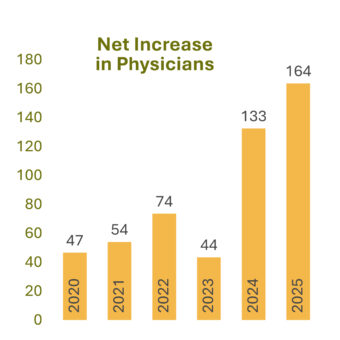
After years of physician shortages, growing vacancies, and mounting strain across the health care system, Manitoba is finally seeing sustained improvements when it comes to doctor recruitment. This is helping to close the gap on the physician shortage, a top concern among physicians.
Beneath that progress, however, is a harder truth: Manitoba still loses too many physicians to other provinces or early retirement. Data continues to illustrate just how crucial it is that efforts to recruit must be matched with investments in retention.
Last year, Manitoba set records with recruitment, adding new physicians at the highest rate in Canada (5.3%), according to the Canadian Institute for Health Information. The province reached a record net gain of 164 physicians last year. This spring, Doctors Manitoba celebrated reaching a new record high of 3,700 practicing physicians in the province. These are all signs that Manitoba is making progress in closing our physician shortage gap.
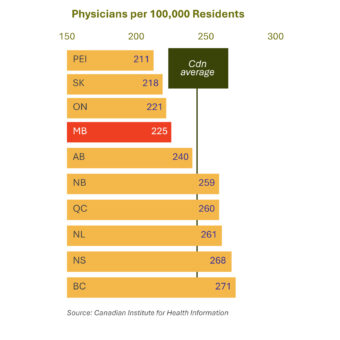
Recruitment still matters. Despite the progress, some specialties and many smaller communities still have significant physician shortages. Manitoba remains below the national average for physicians per capita, with 246 more physicians needed to reach the national average.
Manitoba is at risk of losing 710 physicians in the next three years to retirement and relocation.
(Source: 2025 Annual Physician Survey)
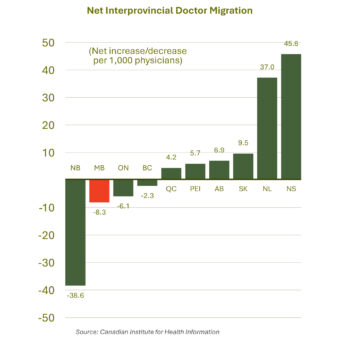
With the progress on recruitment, there is a need to focus more on retention as an area on which Manitoba has historically lagged behind. The numbers paint a stark picture. Manitoba is a net exporter of doctors, losing doctors and learners at all career stages:
- Out-Migration: According to national data from the Canadian Institute for Health Information, Manitoba had a net loss of 8.3 physicians per 1,000 to interprovincial migration last year, the second-worst rate in Canada.
- Future Risk: 22% of practicing physicians are considering relocating or retiring within three years according to the 2025 Annual Physician Survey, largely driven by systemic frustrations, excessive administrative burdens, and burnout.
- Low Graduate Retention: Manitoba also retains fewer medical school students than the national average, historically losing a third of our graduates to other provinces according to CIHI and CAPER. By comparison, Manitoba retains over 93% of nursing graduates. Looking ahead, only 60% of students and residents plan on staying in Manitoba, with 40% planning on leaving or undecided about where to practice.
Doctors Manitoba conducted surveys and focus groups to identify four key areas that can help keep Manitoba’s doctors in Manitoba:
- Reducing Administrative Burden by tackling referral and consultation bottlenecks, pushing for interoperable digital tools, and expanding adoption of AI scribes in all settings.
- Expanding Team-Based Care in family medicine and other specialty practices.
- Strengthening Physician Consultation by rolling out physician engagement guidelines to improve consultation and decision-making within the system.
- Investing in Equipment and Technology that physicians need to offer the exceptional care they have been trained to deliver.