Answering the Call

How Strengthening Physician Leadership Support Strengthens Manitoba’s Health System
By Katiana Krawchenko
When Dr. Harsahil Singh, Vice-President of Medical Services and Chief Medical Officer of the Northern Regional Health Authority, landed in Manitoba from India over a decade ago, he knew one thing to be true: he wanted to provide the best care possible to patients in his newfound home.
What he didn’t realize at the time was how his experience caring for patients within Manitoba’s system would not only spark a deep love of his new community, but a love of leading other physicians and inspiring them to effect positive change.
Inspiring Health Care Changes
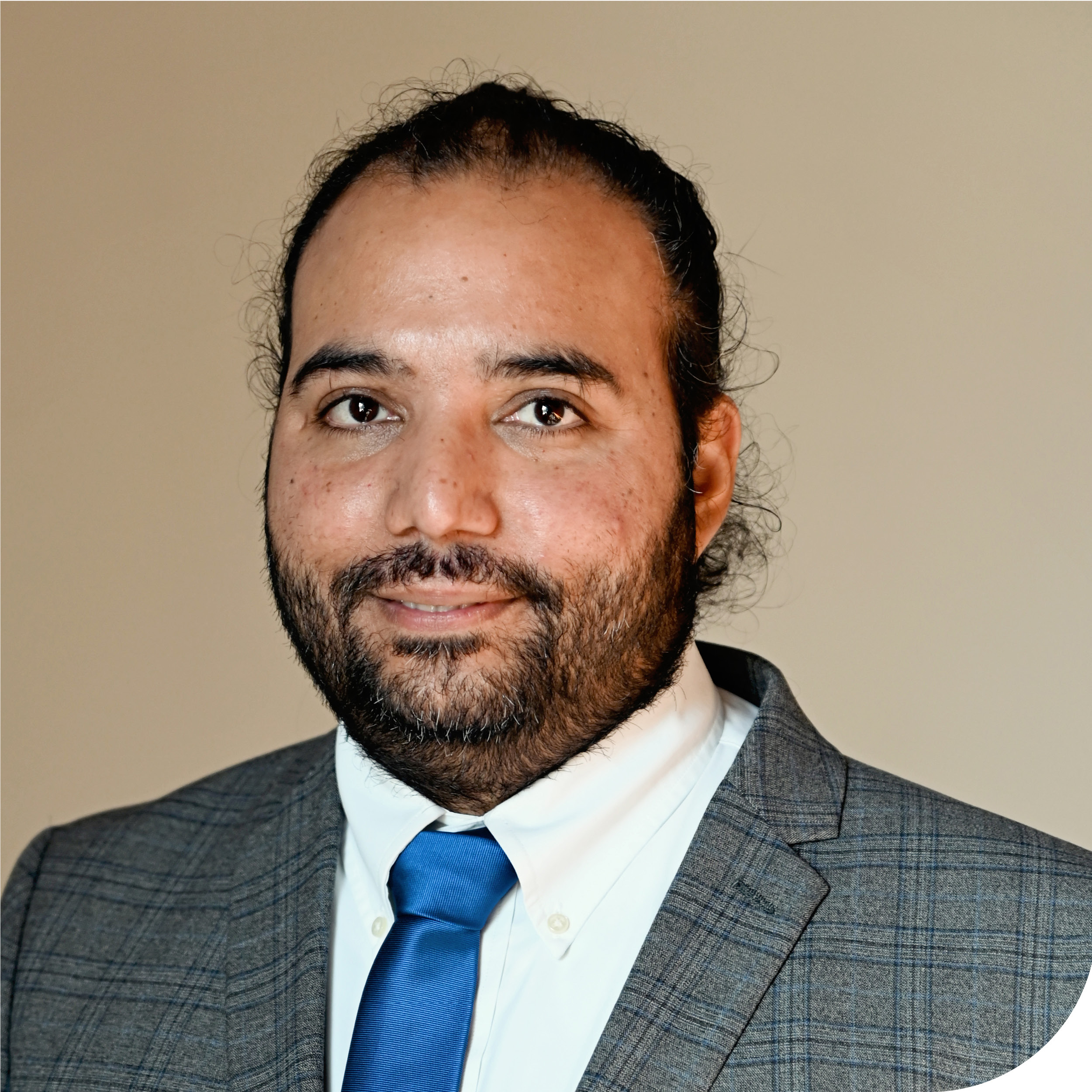
In 2014 Dr. Singh moved from Winnipeg to Thompson and a year later was invited to participate in and evaluate a relatively new concept at the time: My Health Team. It is a team-based approach to treating patients through coordination of physician services with primary care nurses and other allied health professionals.
“It was all about providing a new way of multi-disciplinary care that opened up access to physicians,” explained Dr. Singh, adding the experience showed him the positive changes that could occur with strong, collaborative leadership. It was good for physicians, he said, and good for patients.
“So just doing that work made me interested in health system changes and learning more about how to make those changes,” he said.
As an international medical graduate (IMG) practicing in northern Manitoba, Dr. Singh saw ample opportunity also existed to help his colleagues navigate a new and often complicated system.
“We come from different backgrounds, but even with similar medical training anywhere in the world, one thing that’s lacking is actually the systems knowledge,” he said. “So that’s what motivated me.”
“What I also learned is that IMGs are underrepresented in physician leadership,” Dr. Singh explained. “Because of my experience working on planning for a future My Health Team, I learned how we can bring changes to the system, so then I got interested in doing some leadership work.”
Today, in addition to his roles within the Northern Regional Health Authority, Dr. Singh delivers an annual presentation to International Medical Graduates about the path to physician leadership.
In that presentation, Dr. Singh notes physicians, health care organizations, provinces, medical associations and the nation overall benefit when physicians collaborate in leadership roles and are well supported. Strong tools and skill development for physician leadership at all levels, he points out, are essential to making that system work.
Better Engagement and Improved Patient Outcomes
Clear pathways to leadership for physicians in roles both formal and informal are integral to improving well-being and retention, essential components of a strong health care system.
After years of strain in an under-resourced health system driven by workforce shortages, rising patient needs, and growing system complexity, burnout and distress rates are so high that 43% of Manitoba physicians are considering reducing hours, retiring or leaving the province altogether in the next three years.1
A growing body of evidence shows organizational physician leadership has a profound impact on reducing burnout and promoting job satisfaction among colleagues. Positive leadership qualities of direct physician supervisors decrease the likelihood of burnout and increase satisfaction in the physicians they supervise.2

That is why Dr. Vanessa Poliquin, in her roles as Department Head of Obstetrics, Gynecology and Reproductive Sciences at the University of Manitoba and Provincial Specialty Lead for Women’s Health at Shared Health, strives to ensure her colleagues feel valued, even, and especially, on harder days.
“Right now we’re in a period of potentially massive change in our society, and in health care in general,” she said. “As a leader I have tried within our department to create opportunities for us to recognize and celebrate the individual contributions that everybody’s making. It’s really important that people know they’re appreciated, and we try to acknowledge them in any way we can.”
Dr. Poliquin emerged as a provincial leader during the COVID-19 pandemic when she spearheaded the Obstetrical Working Group, uniting obstetrical providers from across the province to share knowledge and harmonize obstetrical care during the pandemic. Advocacy from this group helped to ensure pregnant women were considered high-risk and thus entitled to receive the vaccine earlier than the general population.
“Leaders from around the province were sitting in the virtual room trying to decide who the high-risk groups were and I made the case for pregnant women being vaccinated,” she said.
“We had seen many pregnant women in the ICU,” she explained. “We knew if you were pregnant with COVID you had a much higher risk of death, hospitalization, and pre-term birth associated with COVID.”
Dr. Poliquin’s experience is just one example illustrating the evidence that strongly supported physician leadership improves patient outcomes.3 Manitoba ended up becoming the only province to prioritize immunization for high-risk women prior to the third wave of the pandemic.
“It was important to me to be a strong advocate for vaccine in pregnancy,” she added. “I think the number one thing is that it is much easier to have courage if you’re doing this for a purpose that’s bigger than yourself. You are there because you have people who are relying on you, whether they are people in your department or people in your community, or the patients that you serve. You’re accountable to all those voices that you’re representing and that responsibility is what gives you the courage to power through what might seem daunting.”
That’s a message she shares with colleagues often, noting with gratitude the patients she serves and the mentors who have supported her throughout her career.
“Very rarely are you in situations where you’re all alone,” Dr. Poliquin explained. “My hope is that every leader would have some sort of a network that holds them up.”
Leadership Tools and Support
Physician leaders can play a significant role in improving the health care system, especially if surrounded by that network and provided with the tools and supports necessary.4
Like Dr. Singh and Dr. Poliquin, Dr. Cornelius Woelk counts himself lucky to have had mentors who inspired him to take on bigger roles in his decades of service as a family doctor in southern Manitoba. He is also grateful for the teams he’s been a part of and led.

“The best way that I see helping with burnout is to share the load. And to do that, you work in teams,” said Dr. Cornelius Woelk, who in one of several roles serves as Medical Director of Palliative Care for Southern Health. He adds that the personal and professional diversity colleagues bring to teams are essential.
“It’s recognizing that there are really important members of your team who can do things that you can’t do, or have experiences you don’t have that can really help the patients” he said.
A large impetus for Dr. Woelk’s launch into leadership roles stemmed from what he learned during the early development of a pre-referral program for cancer patients, which involved getting patients scans and tests done ahead of seeing specialists to help speed up the treatment process. This, in turn, contributed to the development of Manitoba’s In Sixty initiative to get patients through the diagnosis stage and to a first treatment within 60 days.
Similar to Dr. Singh’s experience working alongside team members in other specialties and practices, Dr. Woelk was rewarded by the changes he was able to help drive.
“It was just looking at our local situation and saying somebody’s got to take this on and somebody’s got to look at this for patients,” he said. “There’s an example where for local patients this needed to change and then we helped drive that change.”
Equally as important for physicians and patients, he said, is a commitment to diversity on teams.
“In Manitoba, we’re providing care for a much more diverse society than in the past, so leadership should reflect that,” he added. “If you look back over the years, leadership used to be represented by older white men. And that needs to change, and it is changing, to reflect the society we serve.”
“It’s important for patients to be able to trust medical leadership,” said Dr. Woelk. “I believe they are more able to do that when leaders reflect the society they serve. Patients are more likely to trust leadership when they can connect with them, to say, ‘Wow, this leader looks like me and speaks my language.’ Of course, that may not always be the case, but the fact that leadership mirrors the society it leads goes a long way to developing that trust.”
Dr. Singh echoed these sentiments.
“Particularly as an IMG, everybody thinks that you have to really prove yourself to be seen good enough to practice medicine because sometimes it could be communication issues, sometimes it could be challenges with your practice style, sometimes it could be lack of systems knowledge and lots of things,” Dr. Singh said. “But I wanted to send that message, that as an IMG, you actually bring in a diverse perspective which makes you really good in leadership because you’ve seen another health care system.”
Support for Current and Future Physician Leaders
As much as a leadership role can be rewarding, it can also be incredibly challenging, especially in the health care space. Studies show physicians often feel deterred from taking on leadership positions in part because of a lack of training available and a negative view of the type or responsibilities leaders face. It’s a concern shared globally.
“Some people when they get into leadership roles are frightened about making an error, and I would certainly be in that camp at the beginning of my leadership journey,” said Dr. Poliquin. “But what has allowed me a little bit of resilience is real acceptance that we don’t have control over everything. I’ve learned ways to navigate it and stay focused.”
Embedding training in leadership skills into the entire health care system, from medical school and residence to clinical practice has been shown to change the perception of physician leaders and be one factor in promoting physician engagement and organizational leadership.5
Doctors Manitoba is committed to providing and advocating for leadership training and mentorship to develop positive and effective leadership skills. In addition to a robust mentorship program with more than 400 participants, one initiative involves running subsidized Physician Leadership Institute courses for members, from learners to veteran practicing physicians. The menu of member supports and resources for current and future physician leaders is growing. Stay informed through our newsletter and website or contact us to indicate what you would like to see in this area.
To future leaders who might be hesitant to take on a role in leadership, Dr. Poliquin says this: “Answer the call. Set your compass due north. Surround yourself with colleagues who will tell you when your compass needs recalibrating. And above all, enjoy the adventure — with authenticity and heart. The beauty comes in the curves and the detours, in realizing we’ll never get it perfectly right. The journey itself is the gift.”
- “Doctors Manitoba | Doctor Shortage Improving, but Focus Needed On….” Doctors Manitoba, https://doctorsmanitoba.ca/new….
- Shanafelt, Tait D., et al. “Impact of Organizational Leadership on Physician Burnout and Satisfaction.” Mayo Clinic Proceedings, vol. 90, no. 4, Apr. 2015, pp. 432 – 40. PubMed, https://doi.org/10.1016/j.mayo….
- Sfantou, Danae F., et al. “Importance of Leadership Style towards Quality of Care Measures in Healthcare Settings: A Systematic Review.” Healthcare, vol. 5, no. 4, Oct. 2017, p. 73. PubMed Central, https://doi.org/10.3390/health….
- CJPLWhat Do Physicians Need to Lead? https://cjpl.ca/needtoleed.htm…
- Ibid.