The Bonds That Hold Us Together

The Desmogleins of Human Connection
by Dr. Alexis Botkin
As a dermatologist, I’ve long been fascinated by how essential structures quietly working at the cellular level, embody the same principle that sustains us as individuals and as physicians: connection.
Desmosomes are intricate, multi-organ complexes that serve as cell-cell adhesion structures within the epidermis. At the core of these junctions are vital glycoproteins, notably desmogleins, which are essential for maintaining skin integrity. Desmogleins act as molecular “glue,” holding intracellular bridges together and ensuring the cohesive function of keratinocytes. When these proteins are compromised, the skin’s connections and architecture unravel. The result can be catastrophic, leading to significant disease states such as pemphigus vulgaris, staphylococcal scalded skin syndrome, or spongiotic inflammatory dermatoses.
It is astonishing to think that the integrity of our largest organ depends on a protein just 160 kilodaltons in size. A minute but mighty molecular tether, they stand as proof that even the smallest bonds hold immense strength.
A Plush Keratinocyte and the Bonds of Friendship
On the day I graduated from dermatology residency at the University of Toronto, my three cherished study partners handed me a gift: a plush keratinocyte. Each of us had one, a small, smiling cell with outstretched arms, a symbol of five years of hard work, laughter, and late-night study sessions.
These keratinocytes would soon come to symbolize the vital bonds of connection and support that would sustain us as we ventured across North America, building our lives. Today, they remain a tangible reminder of the desmoglein-like connections that unite us.
More than a decade later, the ongoing connection with these three friends remains one of the most cherished components of my wellness. We keep a dedicated WhatsApp group with a simple rule: if it dings, respond. We share everything from clinical dilemmas, research updates, and leadership milestones, to the day-to-day moments that make up our lives. These everyday exchanges, filled with humour and empathy, remind me that connection — our own desmoglein— is what keeps the structure intact.
The Quiet Magic Between Doctor and Patient
Like many physicians, I’ve found deep fulfillment in caring for others. Over the years, I’ve discovered that medicine’s most profound moments often unfold in the quiet spaces between patient history, the exam, and the treatment plan. This is a sacred space where a patient might show you a photo of a spouse who recently passed away, or the half-finished sweater they were knitting for a niece while they waited for you in the clinic room. These interactions are a reminder that the essence of care is not just clinical expertise, but human connection. Like desmogleins, they are the small-but-mighty bonds of empathy and trust that hold the fabric of medicine together.
Kintsugi and the Strength in Repair
In the recent past, I found myself fumbling through a new medical diagnosis that I didn’t see coming. Abruptly the doctor had become the patient. Navigating my own unanticipated health challenges has been difficult, both physically and emotionally, yet it has also clarified my perspective. At that time, the pieces of my world lay shattered at my feet without an understanding of how to put them back together.
Yet, like the Japanese art of kintsugi, where broken pottery is mended with gold, those broken pieces became part of a more beautiful whole. Through these experiences, I learned that none of us can walk this path alone. The connections to my peers, to supportive colleagues, family, and loved ones, allowed me to find my way through the fog with a renewed purpose.
The most profound lesson life has offered is the importance of showing up for each other with compassion, support, and understanding.
A New Role: Caring for the Caregivers
Recently, I was honoured to be asked to speak at a retreat on Physician Health and Wellness as part of my new role as Medical Lead for Physician and Medical Learner Health and Wellness with Doctors Manitoba.
Working with our dedicated team, I have had the pleasure of being a part of the breadth of initiatives aimed at supporting the well-being of physicians and learners. As our strategic plan states, our goal is simple: Help physicians be physicians.
I did not fully appreciate the power of that mission until I needed it the most. I have experienced nothing but unwavering support from people who stood beside me, especially during the past five years as I navigated how to be a mother, a wife, and a doctor, who lives with multiple sclerosis.
When I first saw my own abnormal MRI, I felt fear and shame. I didn’t know how to ask for help. When I did, my colleagues responded with compassion and understanding. Every dermatologist in this province, every primary care colleague, every specialist I have worked with or received care from… each one stepped forward without hesitation, to help and support me, to care for me with expertise, and what can only be described as love. That experience opened my eyes to how important it is to be a part of a community who shows up for each other. To establish meaningful connections, our own desmogleins.
An Inventory of Wellness
At that recent retreat, while it was important to share the details of our team’s work on health and wellness, it was even more meaningful to find a way to authentically connect with the physicians in the audience. I decided to bring along a few personal items as an “inventory” of my own wellness.
The first item was a lopsided piece of pottery made for me in Grade 4 by someone I consider chosen family. He’s been in my life since childhood and through MCAT study sessions, paramedic shifts, medical training, and the ongoing adventure of raising families. This brown lump from my childhood sits on my desk beside where I work, as a reminder of connection.
Another item was a small hand-made wool bird with a note tied around its leg: “I will always be grateful to have you as my mentor.” It was a gift from a brilliant international medical graduate I had the honour of working with and learning from.
And finally, I brought my favourite book, The Boy, The Mole, The Fox and The Horse, written in the melodic Scots slang, by Charlie Mackesy. This book contains poignant reflections on bravery and vulnerability. My most cherished passage reads:
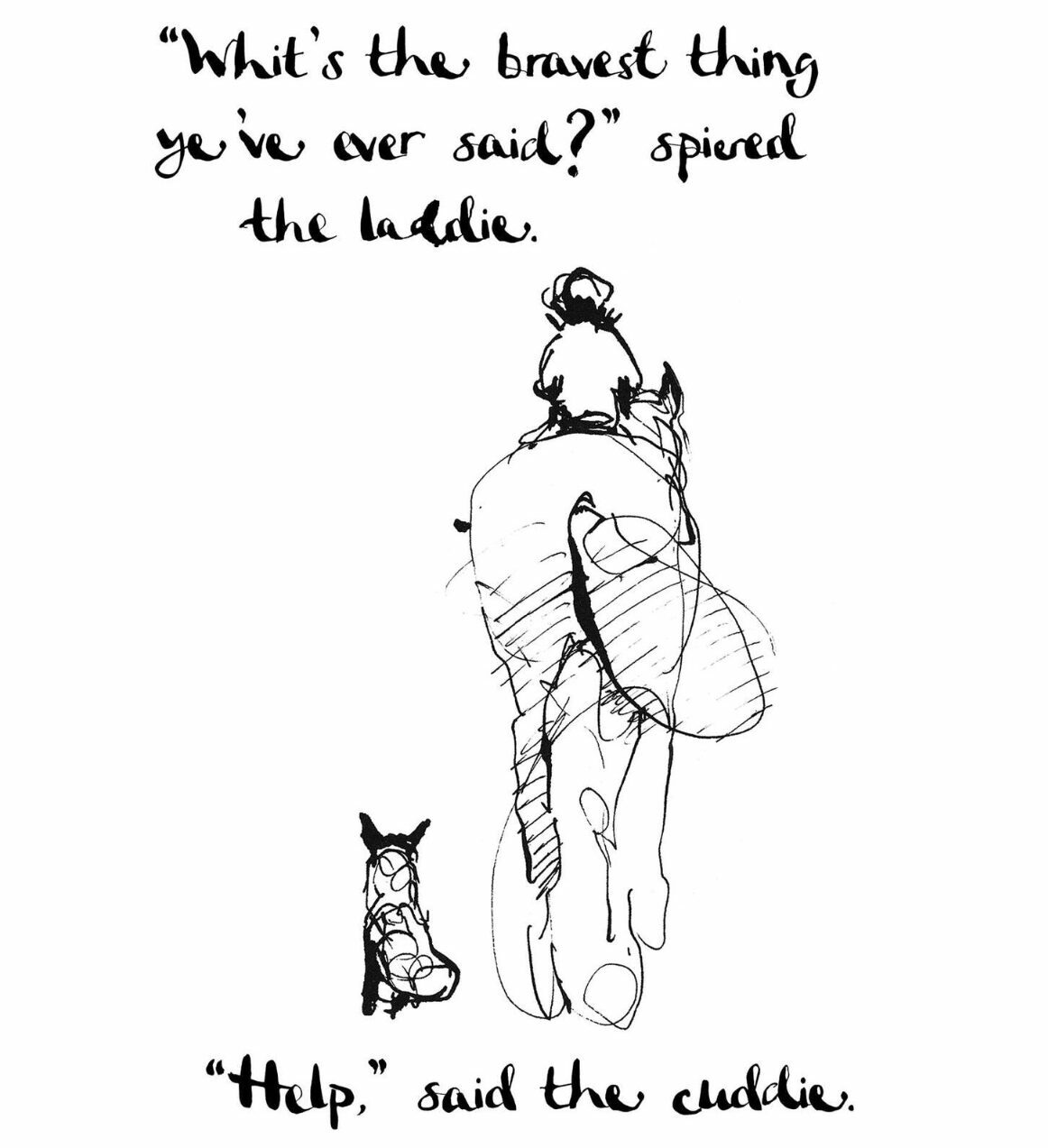
That single word — help — captures everything I hope to bring to my work in physician wellness: the courage to reach out, and the safety to do so without fear of judgment.
My bookmark for that page in the book was a dinner receipt from a recurring evening with four of my medical school classmates. Over shared food and laughter, we remind each other that amidst parenting, doctoring, and just trying to stay afloat, we are not alone.
Finding Meaning in the 80%
Research from Stanford shows that if we spend <20% of our time doing the tasks that we enjoy the most, we increase our risk of burnout. An insightful colleague recently reframed this for me when he said, “Perhaps, finding joy and meaning in the other 80% might be the most essential part of the story.” I couldn’t agree more. But wouldn’t it be great if we could spend more of our time doing the things that bring us joy?
In my new role with Doctors Manitoba, I am also working with a team that is dedicated to reducing administrative burdens, a mission closely tied to physician wellness. Administrative burdens constitutes a significant portion of the 80%. Identifying practical solutions, in a collaborative way, will allow us to impactfully support each other and our patients.
Our Shared Mission
Working with the team at Doctors Manitoba, I see courage, compassion, and connection every day. My goal is to ensure that no physician or learner feels alone or stigmatized when reaching out for help.
By sharing our stories, we can build a culture of medicine rooted not only in excellence but in empathy. A culture where vulnerability is recognized as strength, and where reaching out is seen not as failure, but as connection.
If you or someone you know is struggling, please reach out through Doc360, or connect with a peer support group in your region.
Take time today for your own wellness and nurturing the connections of your life– your own desmogleins.