Reversing Manitoba’s Physician Shortage

By Katiana Krawchenko
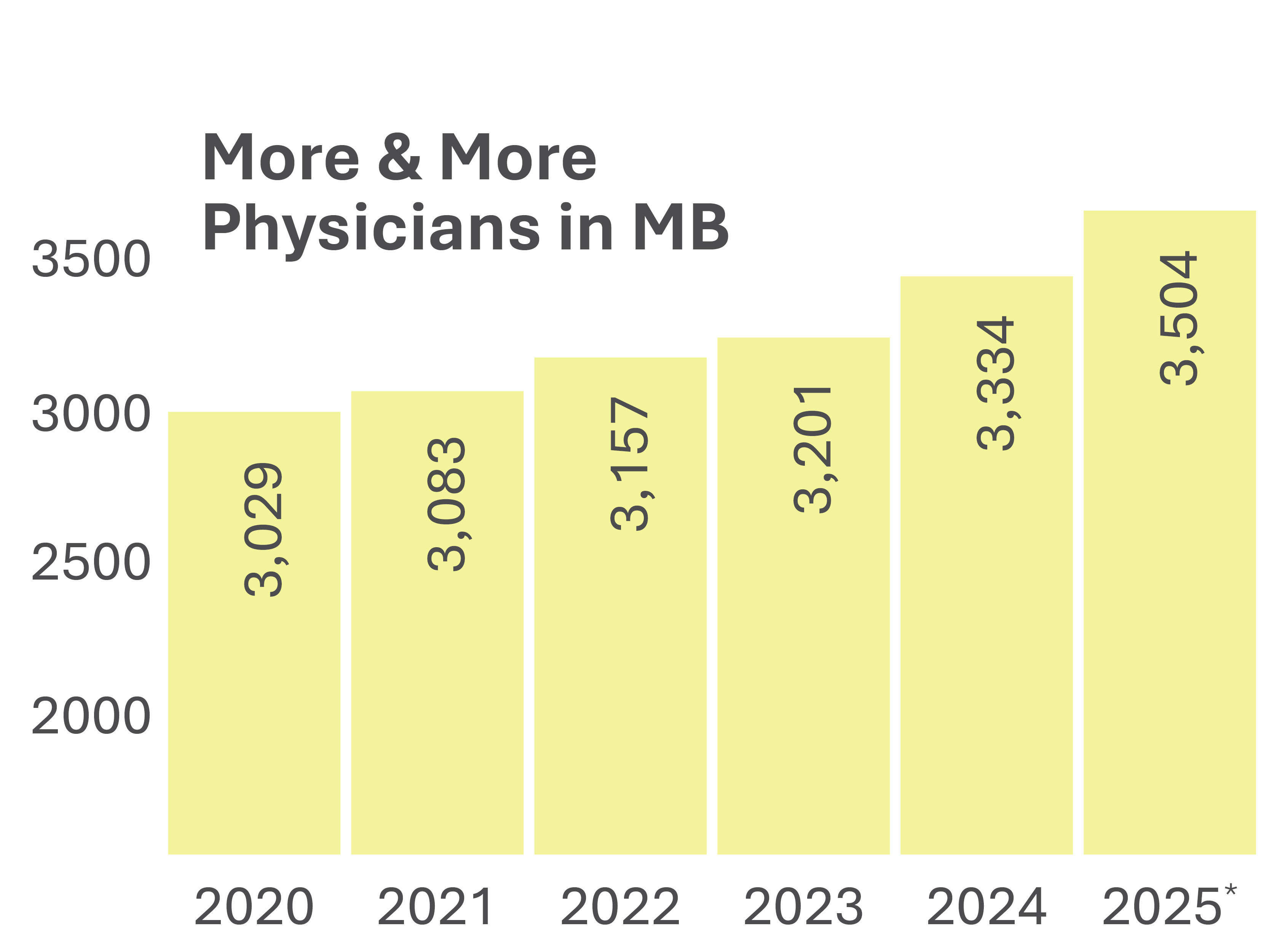
Manitoba now has more than 3,500 licensed physicians — a record milestone reached this spring. While this figure is encouraging, there is plenty more work to do.
In May, Manitoba reached a new record. The province is now home to over 3,500 licensed physicians for the first time — an encouraging sign that shows significant progress after years of advocacy and action to ease Manitoba’s physician shortage. It’s an issue that continually ranks as a top concern for the province’s physicians.
Manitoba has the second lowest number of physicians per capita in Canada, and that means the doctors who do practice in Manitoba are stretched in trying to meet the medical needs of the population.
“Doctors Manitoba made addressing the physician shortage our top advocacy priority based on concerns from physicians,” explained Dr. Nichelle Desilets, President of Doctors Manitoba.“Our recommendations to train, recruit, and retain more doctors have been guided by advice and feedback from doctors, residents and medical students, and their feedback has contributed to the turnaround we are now seeing.”
Doctors Manitoba’s efforts gained momentum in 2023, which contributed to the milestone reached this year. Today, there are nearly 500 more doctors working in the province than five years ago, a significant net increase in the physician supply in Manitoba.
“A large part of this has to do with contributions from our partners in making this progress, including the College of Physicians and Surgeons of Manitoba, the University of Manitoba, Shared Health and the broader health system, as well as the provincial government,” said Dr. Desilets.
Training
The University of Manitoba has played a key role in expanding training opportunities to help increase the number of physicians in Manitoba over the last two years. Doctors Manitoba was a strong voice in the chorus of those recommending the expansion.
This includes:
- Expanding medical school training from 110 to 140 seats
- Increasing residency spaces from 159 to 190
- Expanding the Medical Licensure Program for International Medical Graduates
While training expansions are a longer-term plan, there are already signs of progress.
This year, the University of Manitoba was expecting to fill 188 of 190 residency spaces, a strong signal that the expansions in post-graduate medical training are being sought out and filled.
Of particular note is that all 82 family medicine residency spaces have been filled this year, even as they were increased from 72 last year. This is not the case in other provinces. The CaRMS results for this year show 94 family medicine residency spaces left unfilled across 10 medical schools in Canada.
The success of filling all family medicine residency spaces, including a record number of rural spaces, follows hard work and commitment from family physician leaders and rural physician champions.
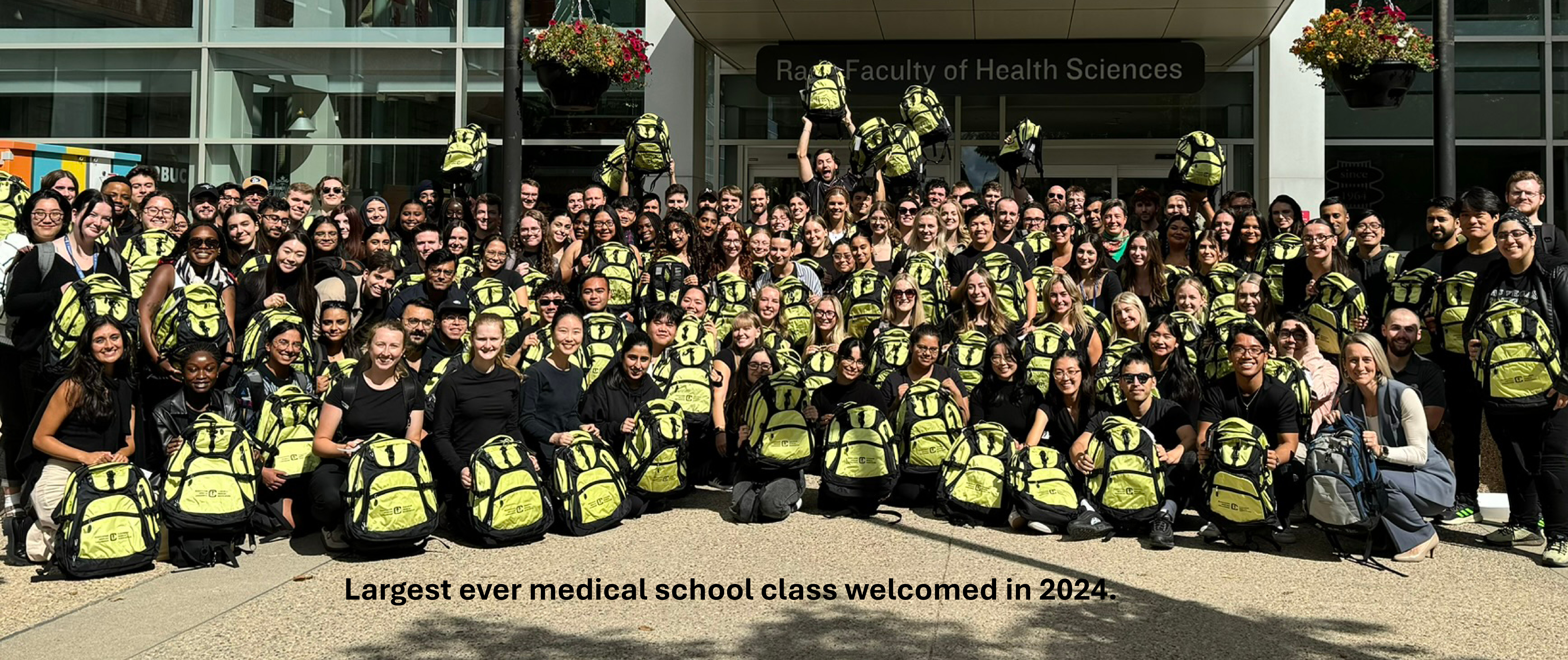
In May, 101 medical students graduated from the Max Rady College of Medicine at the University of Manitoba.
Recruitment
While reaching 3,500 doctors is cause for celebration, Manitoba still ranks near the bottom nationally for the number of physicians per capita, according to national reporting. Many communities remain underserved, and patients continue to face challenges in accessing timely care.
“This is an important milestone, but our collective work is far from over,” acknowledged Dr. Desilets.“The government has made a commitment to hire 400 more doctors over their mandate, and continued work toward that promise will help ensure Manitoba stays on track to turning our doctor shortage around.”
A large part of this work comes at a time when many American doctors are frustrated with the current political climate in the United States, and are looking north for a change. Shortly after the November 2024 election, Doctors Manitoba launched an ad campaign in several states where laws limit physicians’ ability to offer evidence-based medicine in areas like reproductive health, gender-affirming care, or medical assistance in dying. The ads, coupled with national media engagement both in the U.S. and Canada, invite American physicians to Manitoba and explain that a stable economy, a government that says out of the exam room, and celebration of Manitoba’s rich diversity are waiting for doctors in this province.
Doctors Manitoba has been working in conjunction with the province’s Health Care Retention and Recruitment Office (HCRRO) to track U.S. physicians considering making the move to Manitoba. There has been a significant uptick in demonstrated interest.
“We are thrilled to see that our advocacy efforts south of the border are directly related to more inquiries from physicians across the United States,” said Dr. Desilets. “We figured we’d see interest from the Midwest states, but calls have come in from as far as Oklahoma, New York and Florida.”
While it is too early to say just how many U.S. physicians will be making the move to Manitoba, the College of Physicians and Surgeons of Manitoba (CPSM) has made major headway in making it as easy as possible for them, without sacrificing public safety. In May, the College expedited the pathway for qualified U.S. physicians to be granted a full license to practice in Manitoba if they have met certain requirements in the United States. By eliminating the application for provisional registration, this action removes limitations on physicians’ ability to practice medicine in Canada, such as requiring supervisors, assessments, and practice location restrictions, which often proved time-consuming and costly.
“We are excited to see that our work to appeal to U.S. physicians dismayed with the political and financial uncertainties posed by the current administration has inspired our partners who are making concrete changes to our health system,” explained Dr. Desilets. “We are grateful to the CPSM for their efforts and the Manitoba government for approving the recommendation swiftly.”
Retention
Just as important as recruitment in any effort to reverse Manitoba’s physician shortage is a focus on retention.
Last year, Doctors Manitoba updated its strategic plan to include a new priority — helping physicians be physicians. This means as much as possible freeing physicians up from the tasks that take away from patient care. This work involves taking a multi-pronged approach to reducing administrative burden so that doctors can spend more dedicated time with their patients.
Doctors Manitoba is working on three key initiatives to reduce administrative burden: AI scribes, eliminating sick notes, and reducing referral burden.
AI scribes use artificial intelligence and natural language processing to help doctors with transcribing and summarizing patient interactions in real-time. Doctors Manitoba has new resources available to make it easier to integrate this technology into practice and guidance on how to use it responsibly.
Our public advocacy campaign, Sick of Sick Notes, is generating awareness among Manitoba’s employers, government, and the public at large, about the tens of thousands of unnecessary hours doctors spend each year writing sick notes. Doctors Manitoba continues to press for legislation that eliminates sick notes for short-term absences.
Consulting and referring physicians alike say that the current approach for referrals and requisitions wastes about a week of your time every single year. From relying on unreliable fax machines and dealing with misdirected referrals, to frustration with duplication and gaps in information at every turn, the current patchwork antiquated approach isn’t working well for anyone. Doctors Manitoba will be holding a summit on referrals, requisition and collaborative care this fall.
Doctors Manitoba now has a New to Practice program to support physicians in smoothly settling into their practice in Manitoba, with the goal of boosting retention of early career physicians. Other efforts underway focus on tackling other causes of burnout and practice dissatisfaction, as well as strengthening how physicians are consulted and engaged by the health system in decisions that impact their work.